
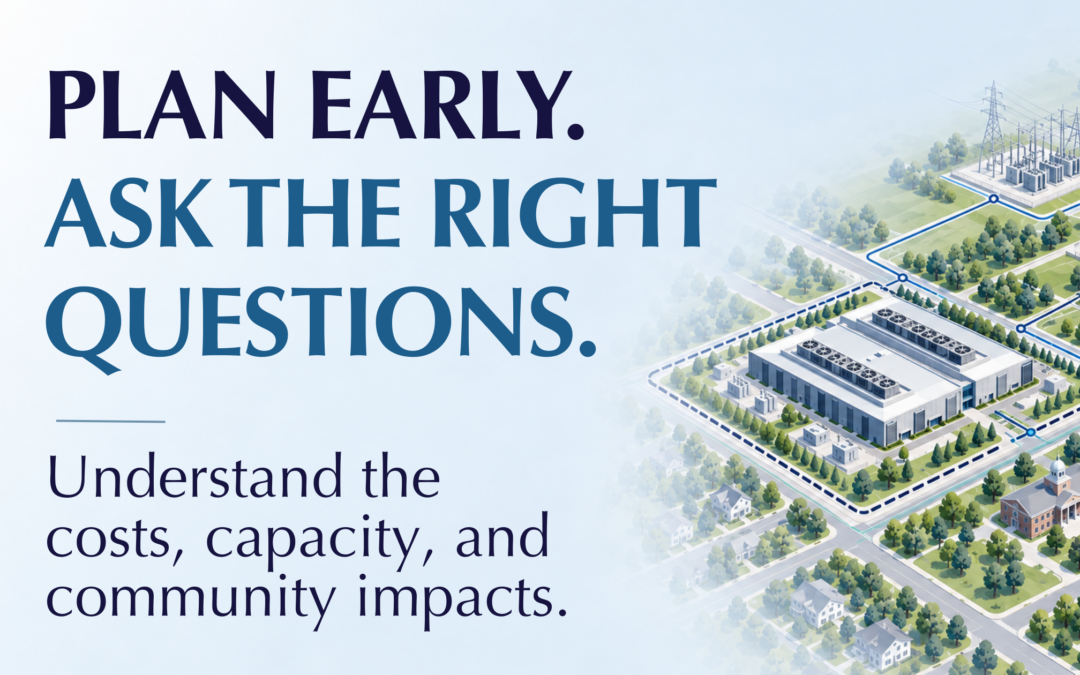
Artificial intelligence, cloud computing, and digital services are driving demand for data centers: large facilities that house servers and equipment used to store, process, and transmit information. For municipalities, these proposals can bring property tax revenue and private investment, along with substantial demands on electricity, water, infrastructure, and municipal services.
Whether your community is reviewing an active proposal or preparing for future inquiries, understanding the long-term financial, operational, and environmental implications is essential to making an informed decision.
Balancing Economic Benefits and Municipal Demands
Data centers support services ranging from financial transactions and healthcare systems to online communications and artificial intelligence. A large facility may expand the commercial tax base, generate construction activity, and create opportunities for infrastructure investment, while providing relatively limited permanent employment compared with some other commercial or industrial uses.
Electricity demand, cooling systems, water consumption, noise, backup generators, and emergency response needs vary with each facility’s size, design, location, and operations. Municipalities should evaluate the specific proposal and its ongoing obligations alongside projected investment and anticipated tax revenue.
What Local Leaders Need to Understand
The Full Fiscal Impact
A comprehensive fiscal impact analysis should examine projected tax revenue, applicable exemptions or incentives, infrastructure improvements, and ongoing municipal service costs.
Consider public investment in roads, water and wastewater systems, and emergency response capabilities, along with changes in property valuations, the durability of revenues, and proposed financial commitments. Understanding both benefits and obligations helps officials evaluate agreements that protect the community’s long-term financial interests.
Infrastructure and Service Capacity
Evaluate whether electrical service, water and wastewater systems, roads, and emergency response capabilities can accommodate construction and ongoing operations while maintaining reliable service for residents and businesses.
Coordinate with public works, utility providers, planning staff, fire departments, and emergency management personnel. Early review of cooling equipment, backup generators, and utility needs can reveal limitations, identify necessary improvements, and clarify who will pay for them.
Zoning and Land Use
Review whether existing bylaws or ordinances define data centers, identify appropriate locations, and establish suitable development standards. Consider building size, setbacks, noise, screening, environmental impacts, utility infrastructure, and emergency access.
Work with legal counsel and planning professionals to evaluate available tools, including updated standards or a temporary moratorium where legally authorized. The appropriate approach depends on state law, local authority, and the community’s planning objectives.
Public Engagement and Trust
Begin public engagement early, while meaningful decisions are still open. Residents may have questions about electricity costs, water availability, noise, environmental impacts, and the community’s financial benefits.
Use clear project information, accessible materials, workshops, surveys, and informational meetings to explain the review process and understand local priorities. An effective process supports informed decisions and transparency, even when residents disagree about the outcome.
Taking a Proactive Approach
Municipalities can assess their readiness before receiving a formal development proposal. Reviewing zoning, infrastructure capacity, financial considerations, and departmental responsibilities in advance helps establish a coordinated process for future inquiries.
Consider how potential development aligns with the community’s master plan, economic development strategy, capital improvement plan, and long-term priorities. A shared review process helps departments work from consistent information and evaluate financial, operational, and infrastructure impacts together.
How Capital Strategic Solutions Can Help
Capital Strategic Solutions (CSS) helps municipalities evaluate complex development proposals and understand their financial, operational, and organizational implications. Our team brings experience in municipal finance, public works, infrastructure planning, organizational assessments, strategic planning, and public engagement.
Working with municipal leadership, department heads, planning officials, technical specialists, and legal counsel, our team can assess potential fiscal impacts, identify infrastructure and service needs, review administrative and operational considerations, and facilitate public participation. Whether your community faces an active proposal or is reviewing its preparedness, CSS can help establish a clear, objective framework for decision-making.
CSS does not advocate for or against data center development. Our role is to provide independent analysis and municipal management expertise so local officials can make informed decisions that reflect their community’s priorities.
Is Your Community Ready?
Preparation begins with a clear understanding of local resources, responsibilities, and priorities. CSS can help your community assess its readiness, evaluate potential fiscal and operational impacts, and develop a strategic approach to future development decisions.