Nearly one-third of Massachusetts remains under drought conditions, and communities across the Commonwealth continue to face challenges balancing water supply, infrastructure needs, and growing demand.
At the same time, utilities nationwide are grappling with rising operating costs and increased pressure on aging water systems.
That is the approach the Town of Hopkinton took through its FY2026 Water Management Act Grant-funded Water Conservation Education Program. Rather than simply responding to drought conditions, the Town invested in a long-term education and outreach initiative designed to help residents understand, value, and protect one of the community’s most important resources.
Working alongside the Water & Sewer Department, Capital Strategic Solutions helped develop a comprehensive communication strategy that combined education, public outreach, digital resources, and community partnerships to encourage sustainable water use—not just during the summer, but throughout the year.
Looking Beyond Water Restrictions
Lasting conservation does not begin when restrictions are announced. It begins long before they are needed.
When people think about water conservation, they often think about watering bans or drought declarations. Hopkinton recognized, however, that protecting its water resources required more than emergency messaging.
The goal was to create a program that would help residents understand why conservation matters, provide practical ways to reduce water use, and build habits that support long-term sustainability.
To accomplish this, the Town developed:
- A Residential Water Conservation Education Plan
- A reusable Water Conservation Outreach Toolkit
- Expanded website resources
- Educational flyers and posters
- Social media campaigns
- Community outreach materials
- Targeted customer communications
- Rain barrel and drought-resilient landscaping education
Rather than creating one-time materials, the project produced a library of resources the Town can continue using for future conservation efforts.
Meeting Residents Where They Are
Effective public outreach means delivering information in ways that are accessible, timely, and relevant.
Throughout the project, Hopkinton reached residents through multiple channels, including updated website content, educational mailings, social media, printed materials, and conversations at community events. By reinforcing the same messages across different platforms, the Town made it easier for residents to learn about conservation and understand how they could help.
One of the program’s most impactful initiatives was direct outreach to approximately 730 households with higher-than-average seasonal water use. Instead of simply reminding residents about restrictions, the mailing offered practical information on leak detection, irrigation efficiency, outdoor water use reduction, and seasonal demand management.
The effort generated meaningful engagement, with approximately 6% of recipients contacting the Water Department to learn more about reducing their water use.
Conservation Is a Community Effort
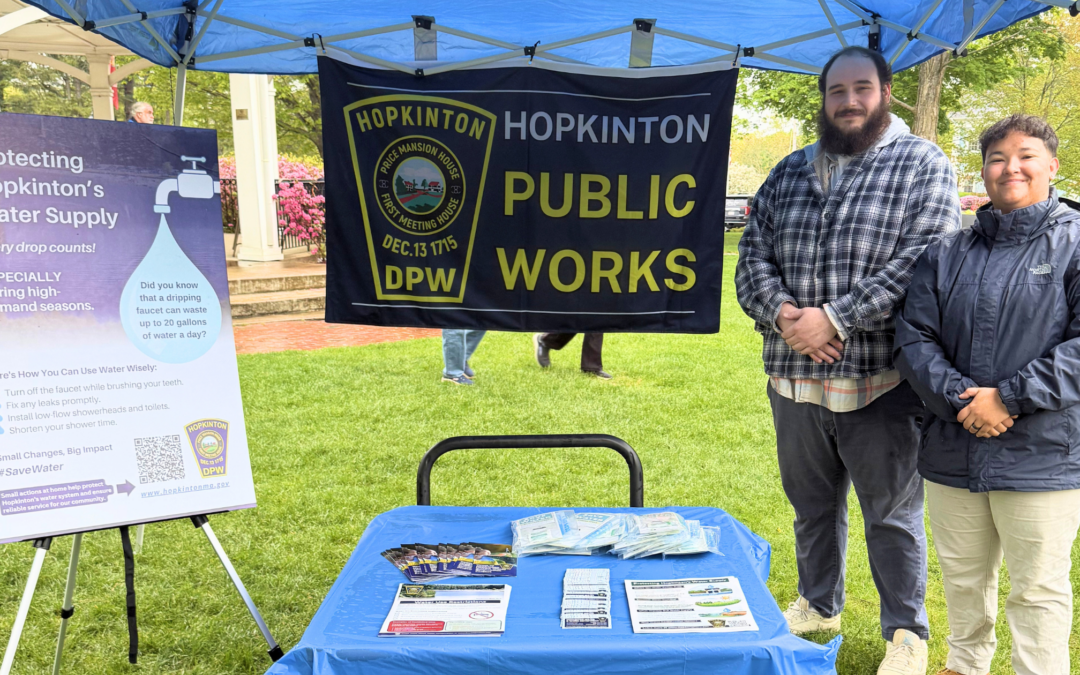
Throughout the grant period, Hopkinton engaged residents at events including Annual Town Meeting, the Hopkinton Garden Club Plant Sale, the Main Street Neighborhood Landscape Tour, and the Hopkinton Farmers Market.
These events provided opportunities for residents to ask questions, learn about current drought conditions, and discover practical conservation strategies.
The Town also partnered with organizations already making an impact throughout the community. Collaborations with the Hopkinton Garden Club, Sustainable Green Committee, local scout groups, and the Hopkinton Public Library helped expand awareness of native landscaping, rain barrel programs, drought-resilient gardening, and sustainable lawn care.
These partnerships reinforced the idea that water conservation is a shared responsibility—one that extends beyond local government.
Turning Education Into Action
Rather than simply asking residents to use less water, the Town provided information that made conservation approachable and achievable.
Educational materials focused on practical, everyday actions residents could take, including:
- Detecting household leaks
- Improving irrigation efficiency
- Conserving water indoors
- Installing rain barrels
- Choosing native and drought-tolerant plants
- Reducing unnecessary outdoor watering
Measuring Success
By the conclusion of the grant, Hopkinton had developed a comprehensive communication program that will continue supporting water conservation efforts for years to come.
Perhaps most importantly, the Town now has a reusable collection of educational materials, outreach strategies, and communication resources that can continue helping residents make informed decisions about water use well into the future.
Looking Ahead
Whether communities are responding to drought conditions, planning for future growth, or investing in aging infrastructure, one thing is becoming increasingly clear: protecting our water resources requires more than regulations alone.
It requires communication.Hopkinton’s Water Conservation Education Program demonstrates how thoughtful public engagement can help municipalities move beyond seasonal messaging to build a lasting culture of conservation. By combining strategic planning, community partnerships, and practical education, the Town created a program that not only addressed today’s challenges but also strengthened its long-term resilience.
At CSS, we are proud to help communities develop communication strategies that transform important public initiatives into lasting community conversations—because protecting our water resources starts with informed, engaged residents.
About Capital Strategic Solutions
Capital Strategic Solutions (CSS) is a certified woman-owned, disadvantaged business enterprise specializing in innovative, cost-effective solutions for local governments. Backed by a multidisciplinary team of municipal experts, CSS offers tailored services in public administration, finance, HR, emergency management, public safety, public works, communications, project management, grant administration and interim staffing—helping communities minimize risk and maximize success.