
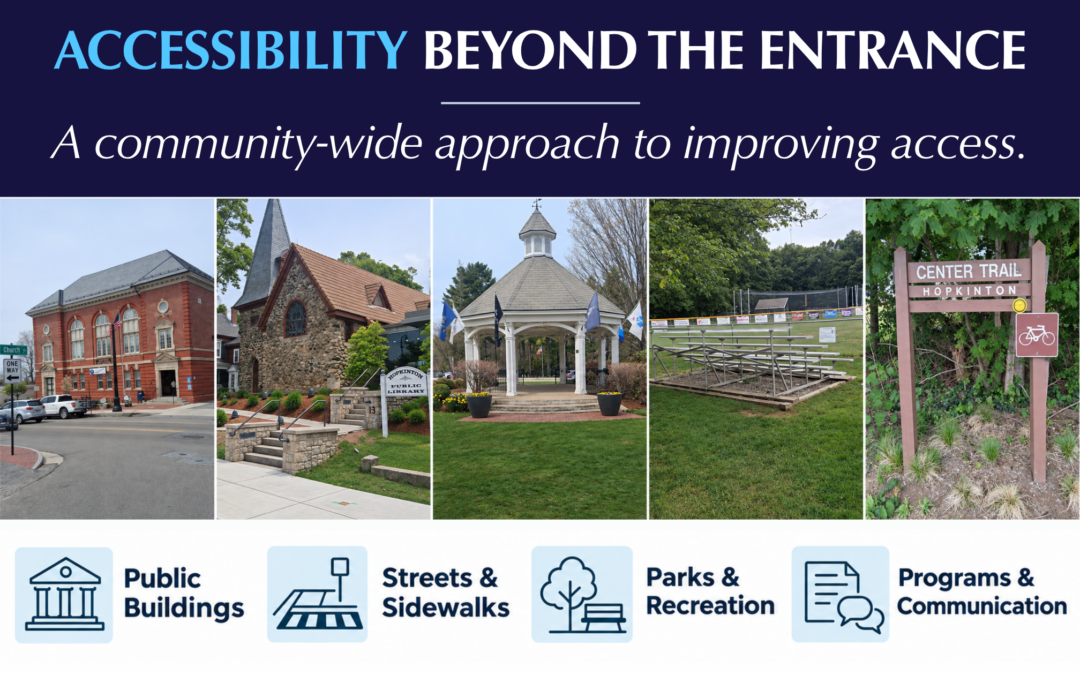
For many New England communities, accessibility questions start with an old building and a long to-do list. When the Town of Hopkinton set out to evaluate accessibility across its facilities, infrastructure, and services, it wanted more than a list. It wanted a plan it could budget for, schedule, and act on.
With its adoption of the ADA Self-Evaluation and Transition Plan, Hopkinton now has a framework to guide that work. The Town retained CSS, in partnership with BETA Group, Inc., to prepare the plan, covering municipal buildings, parks, trails, parking areas, sidewalks, curb ramps, and the Town’s policies, programs, and services.
A Partnership Built for the Whole Picture
Municipal accessibility goes well beyond ramps and restrooms, so the work was divided to match each partner’s expertise:
-
CSS led the on-site evaluations of Town buildings, parks, recreation facilities, trails, and parking areas, and reviewed policies, grievance procedures, public notices, programs, and communication practices. CSS Senior Project Manager and ADA Compliance Specialist Mark Dempsey conducted the facility assessments, and Jennifer Thompson, Chief Development Officer, presented the proposed plan to the Town’s Commission on Disability.
-
BETA Group assessed designated sidewalks, curb ramps, crosswalks, and other pedestrian infrastructure in the public right-of-way, using a GIS-based inventory.
“Capital Strategic Solutions and BETA gave us more than a list of problems. Mark and Jennifer worked closely with our staff and produced a practical roadmap we can build into our capital planning and maintenance, starting with the quick wins.”
Dave Daltorio, PE
Town Engineer/Facilities Director, Town of Hopkinton

What the Evaluation Found
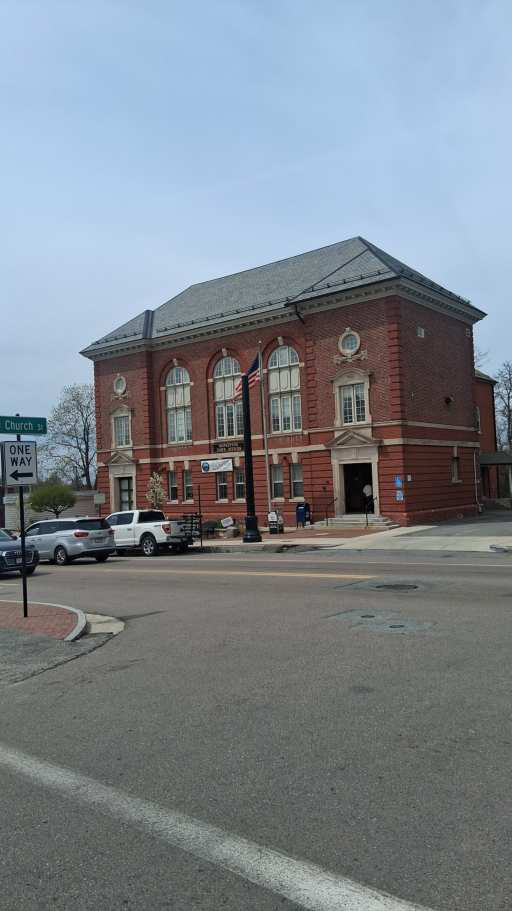
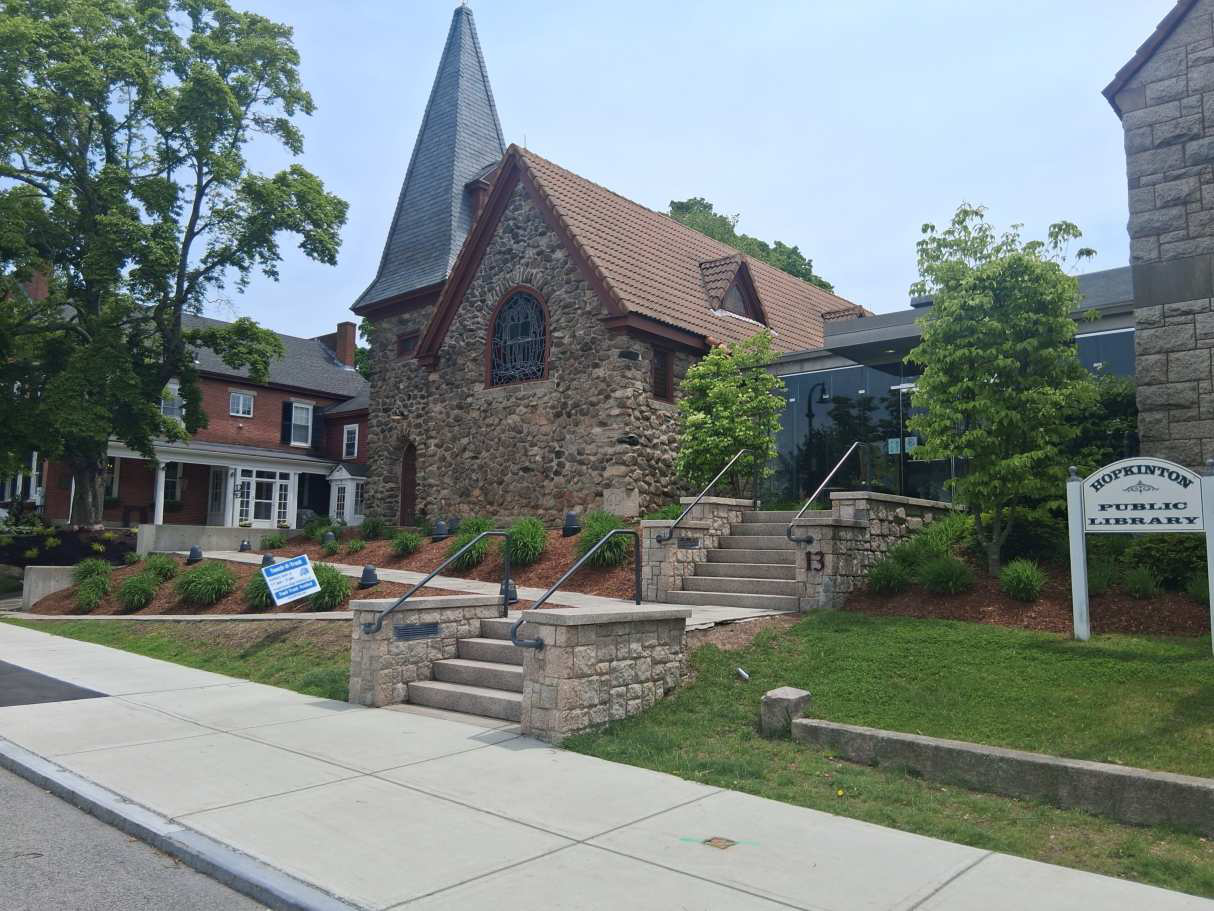
The evaluation identified a strong accessibility foundation in Hopkinton. Many Town facilities provide a high level of accessibility, and newer facilities and recent capital improvements generally reflect accessibility considerations. The Main Fire Station and DPW Facility were found fully compliant, and the Fruit Street Complex has compliant accessible parking, routes, and restrooms.
Many identified deficiencies are relatively minor and can be addressed through signage, striping, hardware, maintenance, or operational changes. Older facilities and public infrastructure require more substantial improvements that the Town can plan for over time.
Priority Is Not the Same as Price
Every identified barrier received a priority ranking, from accessible routes and entrances through secondary amenities, along with a feasibility ranking, a recommended timeframe, and a planning-level cost estimate.
A Priority 1 item is not always the most expensive one. It’s the item most directly tied to access.
That approach helps the Town identify quick wins, such as accessible parking signs and markings, restroom signage, door hardware, assistive listening signage for public meeting spaces, and removal of protruding objects, while planning longer-term improvements through the capital budget.
The plan also addresses administrative measures, including an updated ADA Grievance Procedure and Public Notice, to support consistent accessibility practices across Town departments.
Planning for the Right-of-Way
BETA’s inventory covers 11.49 miles of sidewalks and 244 existing curb ramps in the Town’s priority areas and flags 11 locations where ramps may be missing. It gives the Town a baseline for incorporating accessibility improvements into roadway reconstruction, sidewalk replacement, Complete Streets projects, and utility work.
From Plan to Practice
Adoption establishes the framework for the work ahead. The plan is designed as a living document, with a repeating cycle:
- Identify barriers
- Prioritize improvements
- Budget the work
- Implement improvements
- Document progress
- Update the plan
It places the Town’s ADA Coordinator, departments, and Commission on Disability at the center of implementation, helping make accessibility part of routine maintenance, capital planning, and service delivery.
Why It Matters
Hopkinton’s adopted plan provides a clear accounting of what’s working, what needs attention, and how the Town can move forward. It gives staff and decision-makers a shared reference for making improvements, allocating resources, and tracking progress.
CSS and BETA are proud to have supported the Town and its Commission on Disability in developing this roadmap.
About Capital Strategic Solutions
Capital Strategic Solutions (CSS) is a Massachusetts-certified WBE/DBE municipal consulting firm that supports cities, towns, counties, and public agencies. Our practice areas include ADA compliance planning, municipal operations, finance, grants, and community engagement.
Does your community need an ADA Self-Evaluation and Transition Plan, or an update to one? Contact CSS or email info@capital-strategic-solutions.com.