
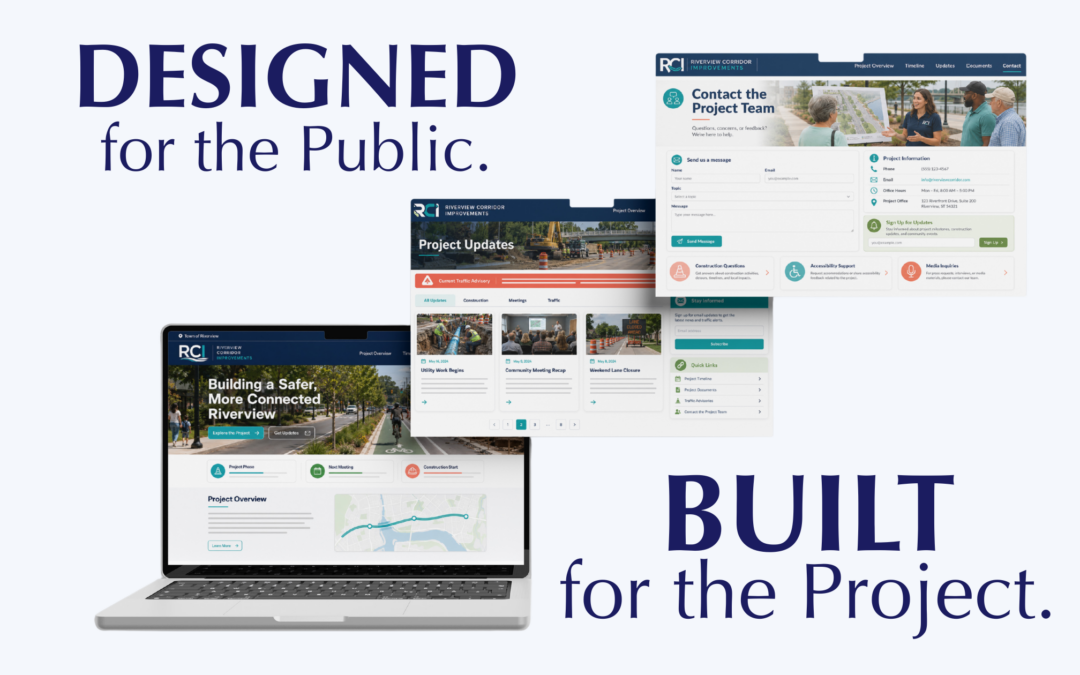
When a community project affects daily routines, public spaces, neighborhood traffic, or access to local services, people naturally have questions.
A well-designed project website gives people a reliable place to get those answers. More than a digital bulletin board, it can serve as the central hub for project information, helping organizations communicate clearly, reduce confusion, and build trust from planning through completion. Simply putting information online is not enough. A great project website must be useful, accessible, easy to maintain, and designed around the needs of the people who will use it.
It Starts with the Audience
The best project websites are built for the public, not for the project team.
Technical staff may be comfortable with engineering plans, procurement schedules, regulatory language, and construction terminology. Most visitors, however, want straightforward answers in plain language. They need to understand what the project means for their street, property, commute, business, or community.
Before developing the site, it is important to consider who will be looking for information and what they are most likely to need. That may include residents, business owners, commuters, elected officials, community organizations, property owners, or members of the media. Understanding those audiences helps determine the site's content, navigation, tone, and features.
Clear, Current Information
A project website should answer the public's most common questions without making visitors search through lengthy reports or meeting materials.
At a minimum, the site should clearly explain:
- What the project is and why it is needed
- Where the work will take place
- The anticipated schedule and major milestones
- How the project may affect traffic, parking, utilities, properties, or public access
- Who is managing the project
- How to ask questions or receive assistance
The information also needs to stay current. An outdated project website can create more confusion than no website at all. Regular updates, clearly labeled dates, and a visible “last updated” notice help visitors know they are reading reliable information.
A Reliable Source of Updates
During a long-term or highly visible project, communication cannot stop after the website launches. The site should be designed to grow with the project.
Construction updates, milestone announcements, public meeting information, detour notices, photographs, and schedule changes should be added consistently. When possible, visitors should also be able to subscribe for email updates, giving the project team a direct way to share important information.
Using the website as the project's central source of truth also strengthens other outreach. Social media posts, mailers, press releases, signs, and public notices can direct people back to one dependable location for complete details.
Accessibility and Inclusive Communication
Public information should be available to everyone. A project website should be designed with accessibility in mind from the beginning, including readable text, strong color contrast, descriptive headings, keyboard-friendly navigation, alternative text for meaningful images, and accessible documents.
Inclusive communication also means considering language access. Depending on the community and the project, translated content or translation tools may be necessary to ensure that residents can understand important notices and participate meaningfully.
Accessibility is not just a technical checklist. It is part of building a site that respects the community and gives everyone a fair opportunity to stay informed.
Visuals That Make Complex Information Easier to Understand
Maps, timelines, diagrams, renderings, photographs, and progress graphics can often explain a project more effectively than several paragraphs of text. The key is to use visuals with a clear purpose.
A project map should help visitors understand where work will occur. A timeline should identify meaningful milestones. Construction photographs should show progress and provide context. Every visual should support the information around it, be clearly labeled, and be accessible to people using assistive technology.
A Clear Way to Connect
Even the most thorough website cannot anticipate every question. Visitors should always have an obvious way to contact the project team.
A simple contact form, project email address, or dedicated phone number can help questions reach the right person. The site should also explain what types of concerns can be submitted and, when appropriate, what response time people can expect.
This two-way communication matters. Questions and feedback can reveal recurring concerns, identify information gaps, and help the project team improve future updates.
Easy for the Project Team to Maintain
A project website is only effective if the people responsible for it can keep it updated. Complicated publishing processes often lead to delays and outdated information.
Before launch, the team should establish who will manage the site, who will approve content, how frequently updates will be posted, and how urgent notices will be handled. A simple content management system, reusable page layouts, and a clear internal workflow can make ongoing communication much easier.
What This Looks Like in Practice
CSS has helped municipalities, housing authorities, water districts, and infrastructure teams create websites that turn complicated public information into useful, approachable resources.
Lowell Water & Sewer Improvement Projects
One central home for sewer separation, flood relief, water main, treatment facility, and lead service line projects, along with practical construction information and project-specific updates.
Highland Avenue Roadway Improvements
A dedicated site supporting public involvement through project goals, conceptual plans, surveys, meeting materials, next steps, a timeline, and update sign-ups.
Framingham Housing Authority
A redesigned, responsive platform centered on the residents, applicants, and community partners who rely on the Authority's information and services.
Think Blue Massachusetts
An ADA-friendly, mobile-optimized resource hub where municipalities and residents can find, download, and share practical stormwater education materials.
Although every website looks different, the goal remains consistent: make essential information easier to find, understand, and use.
More Than a Website
At its best, a project website becomes part of the project's overall public engagement strategy. It supports transparency, gives residents greater confidence in the information they receive, and creates a consistent record of progress.
The strongest sites do not overwhelm visitors with every available document or technical detail. They organize the right information around the public's needs and make it easy to understand, access, and act on.
CSS helps municipalities, public agencies, authorities, districts, and project teams develop accessible websites and coordinated public outreach strategies. From content planning and plain-language writing to website design, construction updates, and community engagement, we help turn complex projects into clear, useful information.
Planning a project that needs a stronger public-facing presence?
Let's build a communication platform that works for both your team and your community.
Contact CSSAbout Capital Strategic Solutions
Capital Strategic Solutions (CSS) is a certified woman-owned, disadvantaged business enterprise specializing in innovative, cost-effective solutions for local governments. Backed by a multidisciplinary team of municipal experts, CSS offers tailored services in public administration, finance, HR, emergency management, public safety, public works, communications, project management, grant administration and interim staffing—helping communities minimize risk and maximize success.