
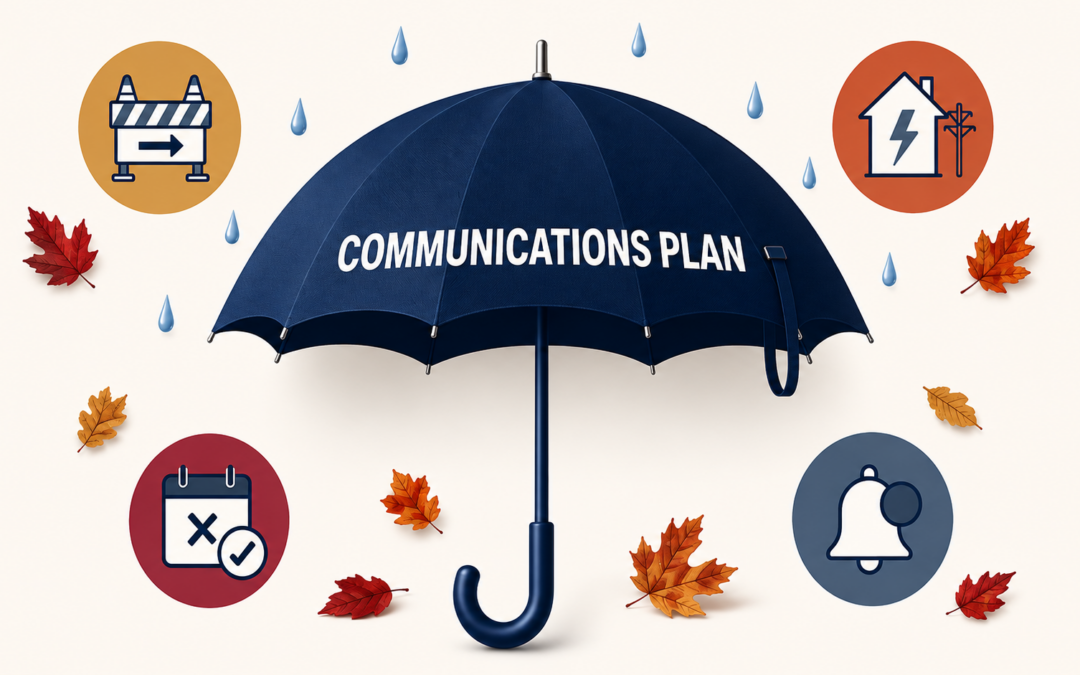
Fall Has a Way of Arriving All at Once in Local Government
If September is when your municipality needs to communicate, August is when the planning needs to happen.
Students return to school. Construction projects enter critical phases. Public meetings and budget conversations pick up. Seasonal programs begin, daylight gets shorter, and municipalities start preparing for storms, power outages, flooding, and other weather-related disruptions.
By the time the calendar turns to September, municipal staff are often communicating about several high-priority issues at once. That is why preparing for fall public engagement cannot wait until the first meeting notice, traffic advisory, or severe weather alert needs to go out. Strategic communications are not simply the last step after operational decisions have been made. When public safety is involved, communications are part of the operation itself.
Good Communication Begins Before the Urgent Message
During an emergency, residents need information that is clear, timely, accurate, and easy to act on. Municipal staff need to know who is responsible for gathering facts, verifying details, approving messages, answering media questions, and distributing updates across multiple channels.
Those responsibilities become much harder to define under pressure. A contact list that has not been updated, an alert platform that has not been tested, or a message that must pass through an unclear approval process can cost valuable time. Just as importantly, relying on one digital channel can leave some residents without the information they need.
Late summer offers municipalities an important window to assess what is working, identify gaps, and prepare before the fall calendar becomes crowded. The goal is not to predict every situation. It is to create a communications framework that can adapt when conditions change.
What Municipalities Can Do Now
-

Review Audiences and Channels
Consider how older adults, families, businesses, commuters, renters, people with disabilities, multilingual households, and residents with limited connectivity receive municipal information. A strong plan meets people where they are.
-
Clarify Internal Roles
Identify who develops messages, confirms operational details, approves information, and serves as the public or media contact. Establishing this structure now helps prevent conflicting or delayed updates.
-
Prepare Core Materials
Draft adaptable templates for weather alerts, road closures, service interruptions, meeting changes, shelter information, and utility notices. Prepare accessible graphics and translated materials before they are urgently needed.
-

Build Redundancy
Email, text alerts, websites, social media, local media, community television, printed notices, phone trees, and direct outreach can reinforce one another when a primary channel is unavailable.
-
Test, Listen, and Improve
Test notification systems, walk staff through realistic scenarios, confirm links and phone numbers, and ask residents whether they know where to find trusted information. Use what you learn to strengthen the process.
A Timely Lesson from Petersham, Massachusetts
Capital Strategic Solutions’ recent work with LB Comms and the Town of Petersham reinforces the value of planning before a community must depend on its communications systems. Supported by Municipal Vulnerability Preparedness funding, the project examines emergency communication procedures, technology, internal responsibilities, training, and the Town’s ability to reach residents during climate-related emergencies and power outages.
Petersham’s work is specific to its community, but the lesson applies broadly: emergency communications should be evaluated, coordinated, and tested before an emergency occurs.
Explore the Petersham Project
Public Engagement Builds Public-Safety Readiness
Preparedness extends beyond emergency alerts. The trust municipalities build through clear, consistent updates helps residents know where to turn when information becomes urgent.
Construction updates, utility notices, accessible meeting materials, and seasonal safety education all strengthen public understanding and reinforce municipal channels as reliable sources.
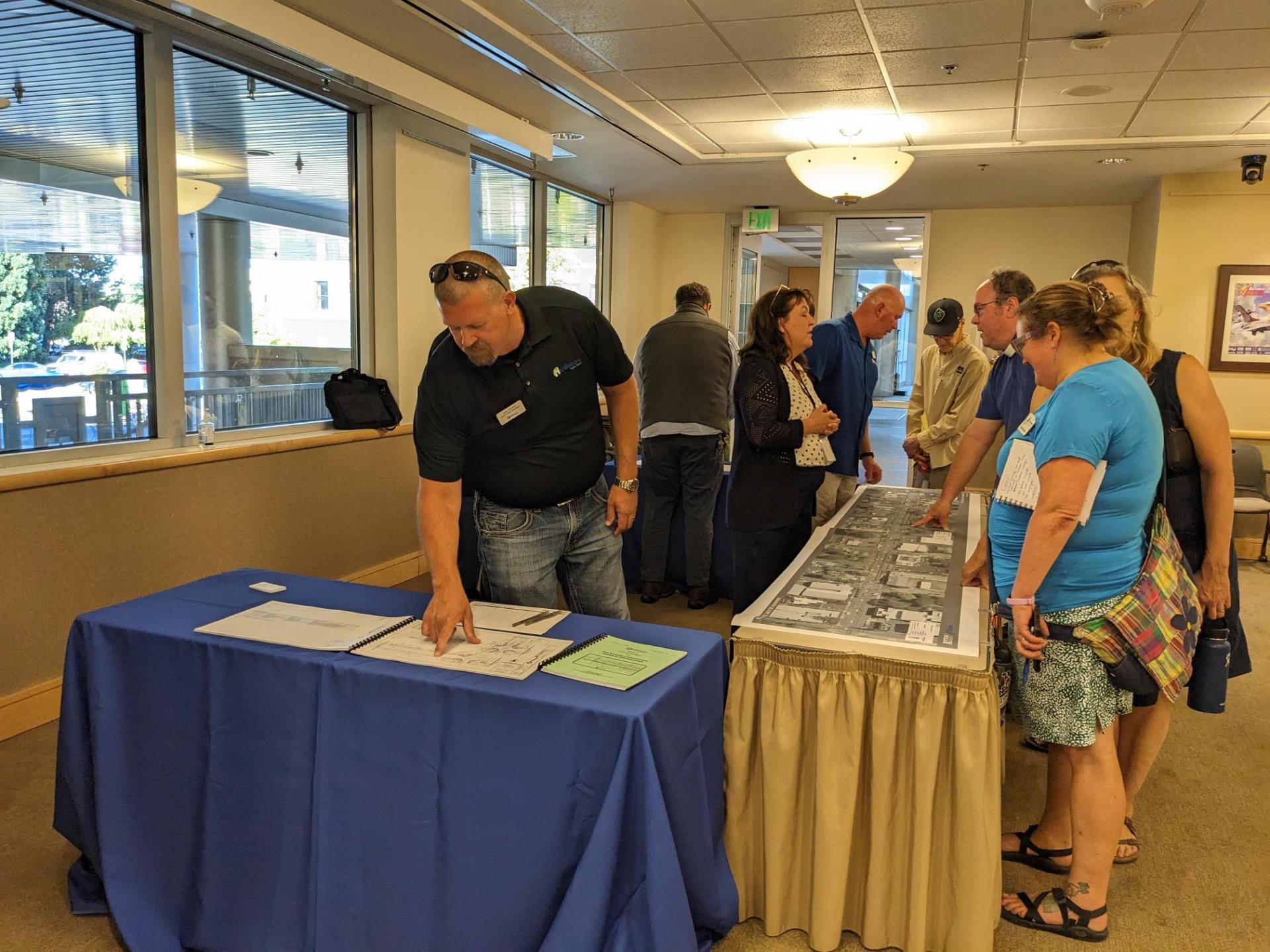

Build the Framework Before the Calendar Gets Crowded
Every municipality has different staffing, technology, risks, and community needs. Effective planning begins by understanding that local landscape and building a practical system around it.
Capital Strategic Solutions brings together expertise in public relations, community engagement, emergency management, public safety, project coordination, and creative services. We help municipalities assess communications, identify stakeholders, develop procedures, create accessible materials, coordinate outreach, train staff, and put plans into practice.
The best time to build public trust is before residents are asked to act.
Strengthen Your Communications PlanAbout Capital Strategic Solutions
Capital Strategic Solutions (CSS) is a certified woman-owned, disadvantaged business enterprise specializing in innovative, cost-effective solutions for local governments. Backed by a multidisciplinary team of municipal experts, CSS offers tailored services in public administration, finance, HR, emergency management, public safety, public works, communications, project management, grant administration and interim staffing—helping communities minimize risk and maximize success.